Noisy Breaker Box in Your Ashfield Home
Switchboard humming, buzzing or clicking away in your Ashfield home? It's worth listening to.
Boards that work quietly for years don't usually start making noise for no reason. Call (02) 9054 3079 and we'll work out what yours is telling you.
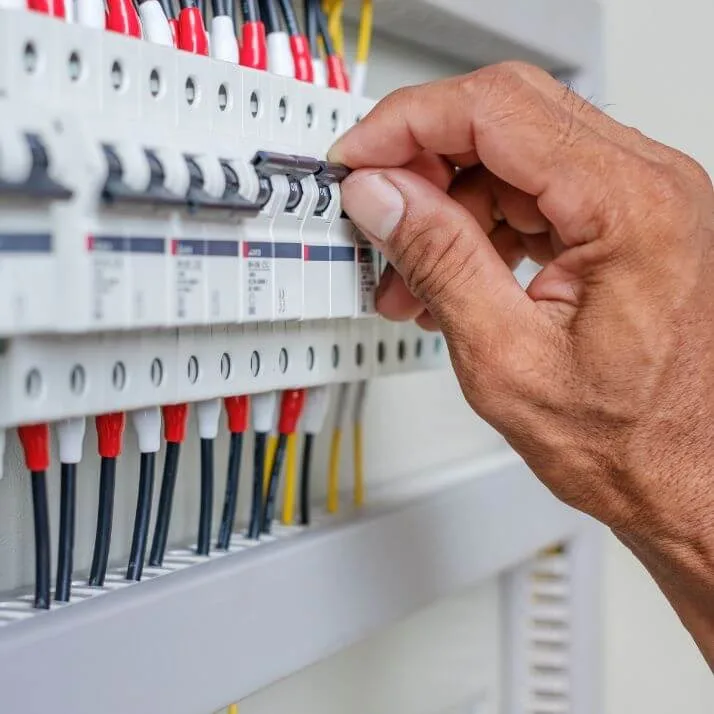
Why Your Switchboard Is Making That Noise
Electrical connections are meant to be silent. Any hum, buzz, crackle or repeated clicking means current isn't flowing the way it should through a joint, a breaker or the board itself.
A steady, low hum can simply be a transformer or older-style meter doing its job. A crackle, pop, or a buzz that gets louder over days is different.
That pattern usually means a connection has loosened enough for current to arc slightly across the gap, generating heat and noise at the same time.
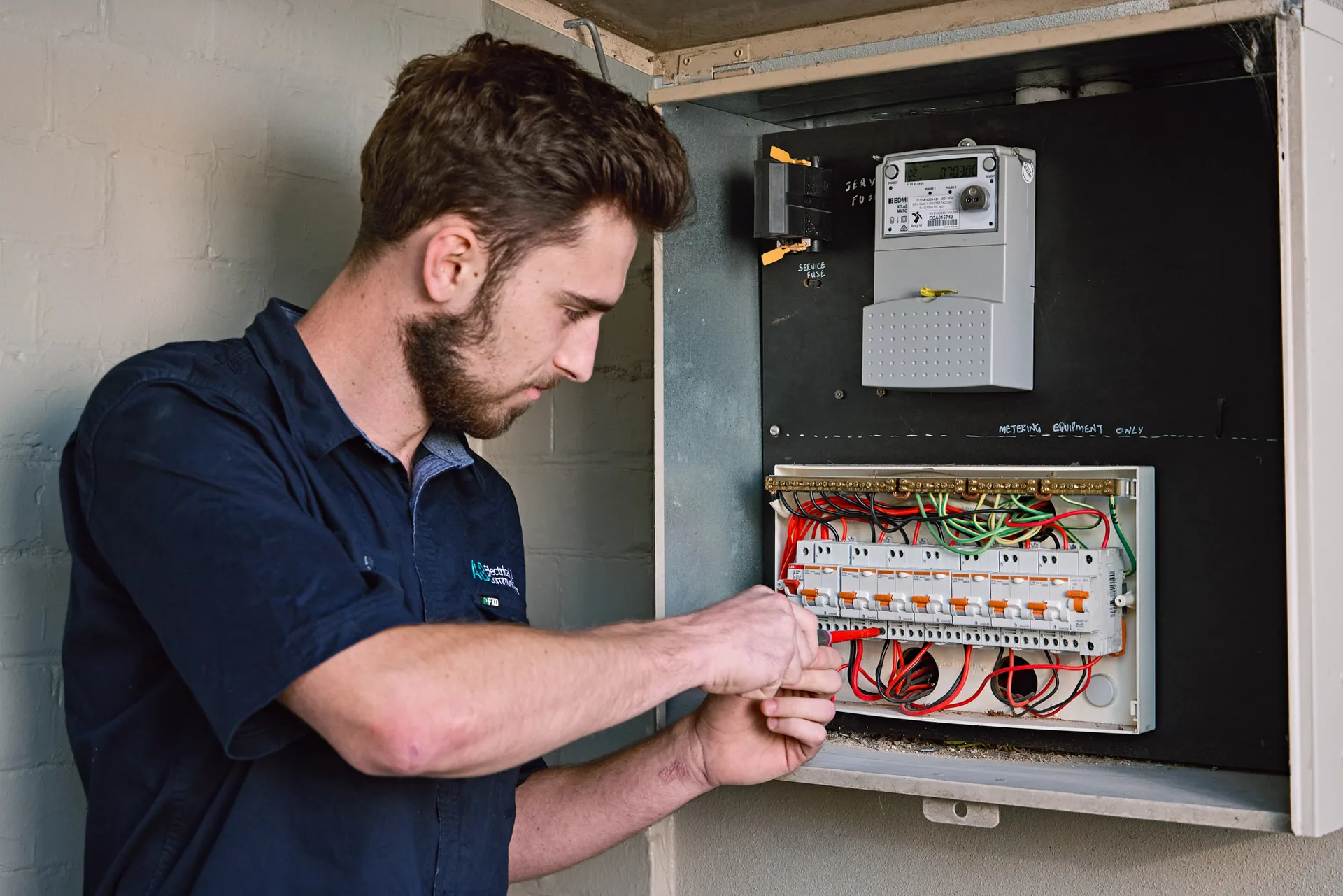
How Serious Is It?
A soft, unchanging hum rarely needs urgent attention.
Escalating noise is a different story. Buzzing that's grown louder, any crackling or popping sound, a burning smell near the board, or warmth on the switchboard cover are all signs a connection is degrading right now.
Any of those, and the safest move is to switch off the main and get us out. A steady hum with nothing else unusual can go into a normal booking instead.
Clicking that repeats every few minutes, even with nothing obviously running, also deserves a prompt call rather than a wait-and-see approach.
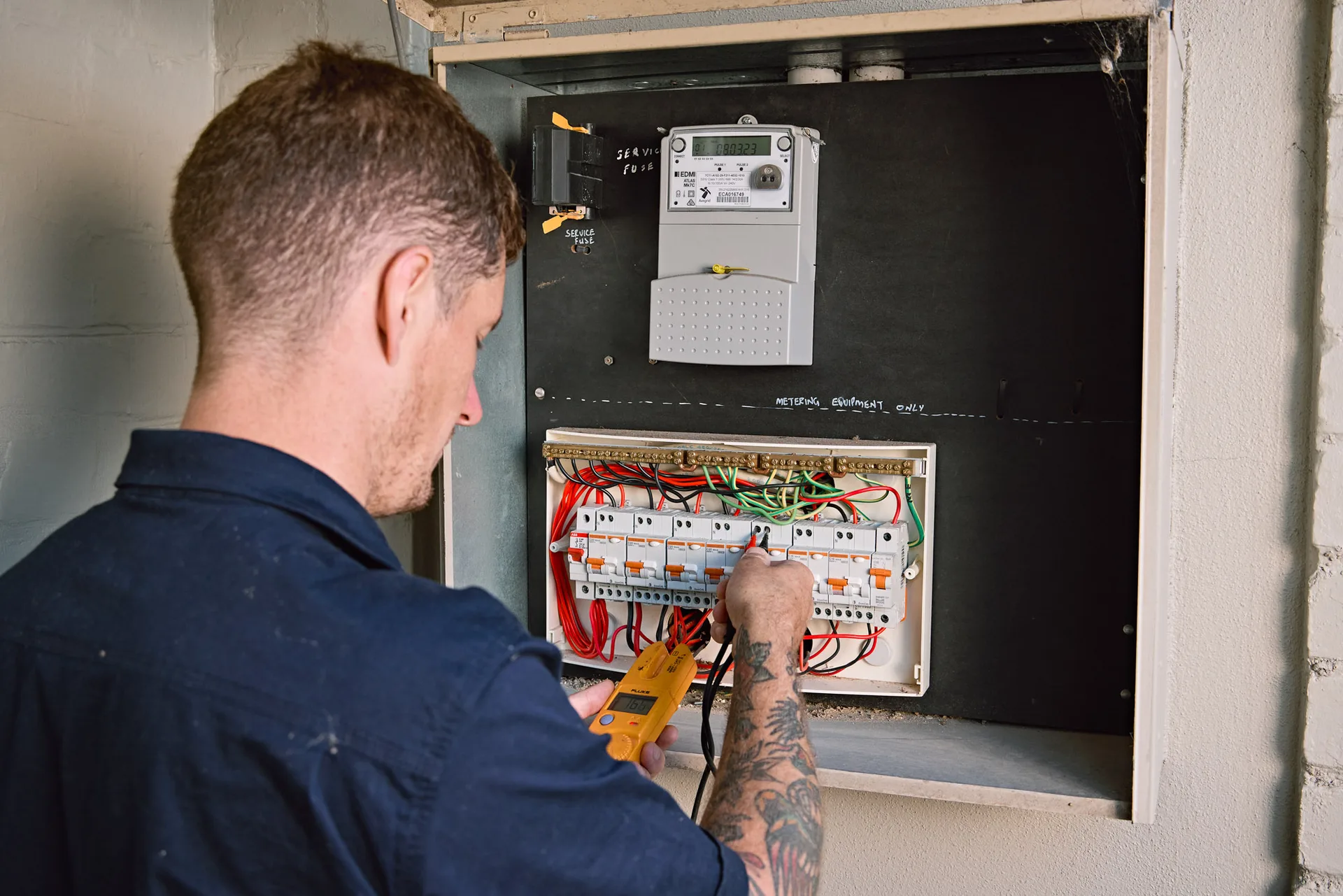
What Usually Causes It
None of these fix themselves, and most start small before they announce themselves properly. Here's the order we usually find them in:
- A loose terminal connection inside the board, which arcs slightly and produces the buzz or crackle
- A failing breaker that's nearing the end of its life and struggling to hold a clean connection
- Ceramic fuses under load, which can hum audibly on an older board as they carry current
- A safety switch nuisance-tripping repeatedly due to a fault elsewhere on its circuit
- Corrosion at a connection point, common in boards that have never been serviced
- A genuinely overloaded circuit drawing more current than the wiring is rated for
Knowing which one applies before we arrive isn't necessary. Describing the noise accurately over the phone helps us bring the right parts on the first visit.
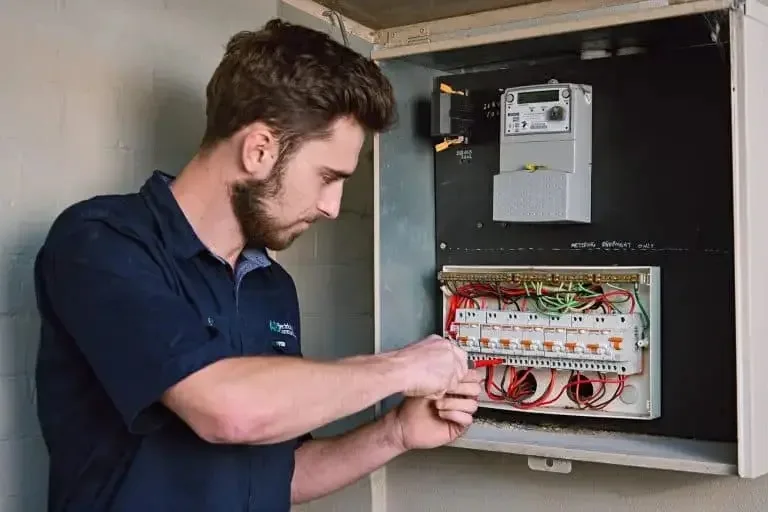
Do This First
- Note the pattern. A constant hum, an intermittent crackle and repeated clicking point to different problems, so tell us exactly what you're hearing.
- Check for heat or smell. Put a hand near the board (not on it) and check for warmth or any burning odour.
- Switch off the main if anything feels wrong. Heat, smell or a worsening noise all justify killing power to the board until we arrive.
Don't keep opening the switchboard cover to look inside. Leave that to us.
How We Fix the Fault for Good
Every breaker and connection point gets checked in turn, often backed by thermal imaging that shows a joint running hot before it fails outright.
A loose terminal gets remade properly, and a failing breaker gets replaced with one rated correctly for its circuit.
Where ceramic fuses are the source, that's usually the moment to talk about a modern switchboard instead of patching an ageing one.
All work is carried out to AS/NZS 3000, with a Certificate of Compliance issued for anything notifiable.
The Ashfield Pattern We Keep Seeing
A good share of Ashfield's older stock, particularly the pre-war cottages and post-war walk-up flats, still runs boards fitted decades before modern circuit protection existed.
Ceramic fuse carriers and early breakers weren't built for the loads a household draws today, and a board pushed past its comfortable limit tends to hum or buzz well before it fails outright. That's often the first sign an upgrade is overdue rather than optional.
Owners in the suburb's converted flats hear it differently again. A shared or communal board serving several units can carry noise from one tenant's overloaded circuit into the next, which is why we always test the whole board, not just the unit that called it in.
Prevention Beats Repair
- Have the switchboard checked every few years, particularly if the property is older or hasn't been inspected recently
- Replace ceramic fuses with modern circuit breakers, which fail cleanly rather than degrading slowly with noise
- Avoid overloading a single circuit with high-draw appliances that push connections harder than they're rated for
- Book a check as soon as noise changes, rather than waiting for it to become a full outage
Catching a loose connection early is a much smaller job than a full board replacement after it fails.
A quiet board isn't proof everything is fine either. It just means nothing has degraded enough to make noise yet, which is exactly why a periodic check is worth booking rather than waiting for a symptom to force the issue.
Other Faults We Chase Down
A noisy board sometimes turns out to be behind a power outage once a connection finally gives way, or shows up on the same circuit as one that won't stay reset. Where the sound comes with dimming globes, our page on flickering lights is worth a read too.
We handle the same fault regularly across Croydon, Haberfield and Dulwich Hill.

Call Us Today, We Will Sort It
Buzzing, clicking or humming switchboard? Ring (02) 9054 3079 and we'll get it checked properly.
Often same or next day, and you'll know the cost in writing before we touch anything.
Common questions
Common Noisy Breaker Box FAQs
Is a buzzing switchboard dangerous?
It can be. A steady hum from a transformer isn't usually urgent, but a crackling, popping or louder buzz points to a loose connection that needs attention soon.
Why does my switchboard click on and off?
Repeated clicking is often a breaker struggling to hold a connection, or a safety switch reacting to a fault somewhere on the circuit it protects.
Can I keep using the circuit while I wait for someone to check it?
If nothing's tripped and there's no smell or heat, yes. Anything scorched, hot to touch or smelling of burning means switching that circuit off first.
Does a safety switch stop a switchboard from being noisy?
No. It guards against shock if a fault goes to earth, but a hum or crackle is a separate wiring issue that needs its own fix.
How do you find what's causing the noise?
Each breaker and connection gets checked individually, sometimes with thermal imaging to spot a joint running hotter than it should before it fails.
How long does fixing a noisy switchboard take?
A single loose connection is often a same-visit fix. A full board that needs upgrading takes longer, and we'll always confirm timing before starting.